
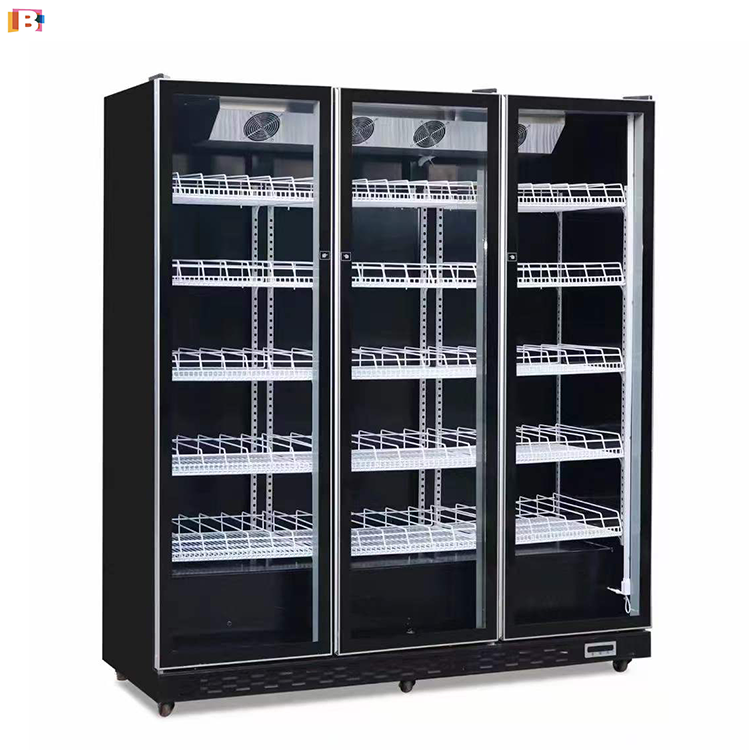
1. Start with the application
Beverage merchandising, packaged-food display and branded promotion can use similar glass-door cabinets, but the operating pattern may differ. Identify the products, target temperature, daily access, store format and expected loading pattern before comparing capacity. This prevents a buyer from choosing a cabinet only because its external size looks suitable.
2. Define cabinet format and usable display
Record the available floor space, door count, preferred shelf layout and the dimensions that matter to the store. Ask whether the published capacity is gross or net and compare usable shelf space, not only a single liter figure. Door opening, shelf adjustment, lighting and header space can affect daily merchandising as much as cabinet volume.
3. Match cooling to the operating environment
Ambient temperature, humidity, door-opening frequency and product load influence temperature recovery. Fan cooling can support air circulation and recovery in frequently accessed retail cabinets, while direct cooling may suit buyers prioritizing a simpler platform. The final choice should be confirmed against the exact model, climate condition and application rather than treated as a universal rule.
4. Confirm electrical, refrigerant and compliance
State the destination country, voltage, frequency and plug requirement. Confirm the refrigerant and required certification or market documentation for the selected model. A supplier should not assume that one certificate covers every cabinet in a range. Ask for the model family, report or declaration scope before using a compliance claim in your own sales material.
5. Include branding and serviceability
If the cooler will carry a brand, define the cabinet color, logo position, illuminated header, side-panel graphics, rating label, manual and carton. Also consider cleaning access, replaceable components and the spare-parts information expected by the distributor or service partner.
Quotation checklist
A clear brief makes supplier comparisons more accurate because every quotation can be reviewed against the same operating and commercial requirement.
- Destination country and sales channel
- Application and products to be displayed
- Available space, door count and capacity preference
- Ambient condition and expected access pattern
- Voltage, frequency, plug, refrigerant and required documentation
- Branding, label, manual and carton requirements
- Estimated quantity and target delivery date