
Manufacturing process
How commercial coolers and freezers are made.
Follow the main stages from sheet-metal preparation to packed equipment. The exact sequence depends on the cabinet design, materials and refrigeration system; some operations run in parallel.
Our OEM production workflow brings cabinet construction, assembly, inspection and packing together around the agreed product specification. Customer branding has been removed from selected photographs for confidentiality.
Stage 01
Sheet-metal preparation
From flat sheet to shaped cabinet panels.
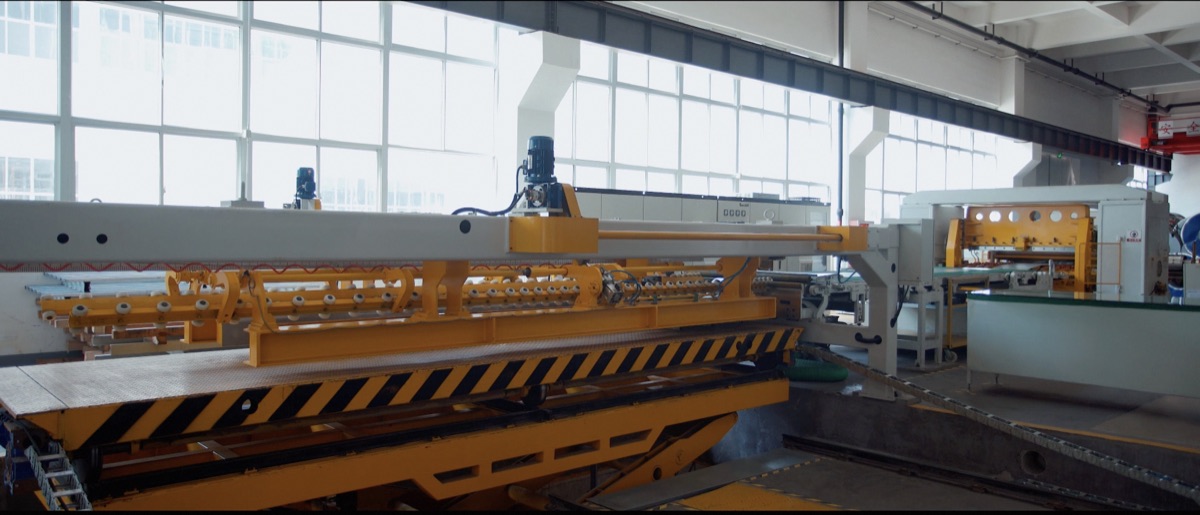
Sheet loading equipment 01Material loading
Sheet material is fed into the processing line for the selected cabinet design. Material grade, thickness and surface condition are important inputs to the finished structure.
Review focusMaterial specification and surface condition
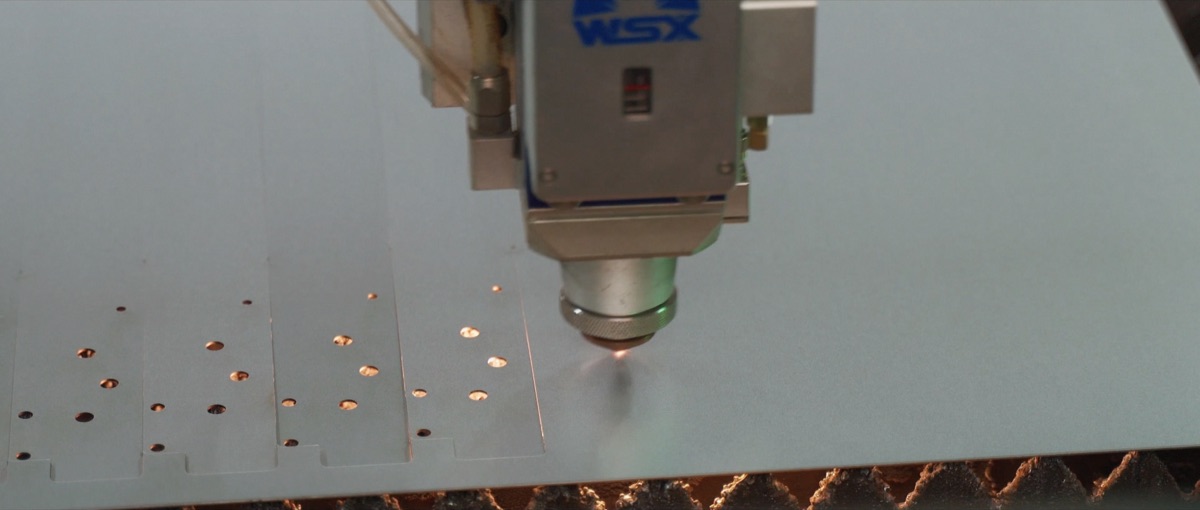
Laser processing of sheet-metal openings 02Cutting & hole processing
Cutting and punching or laser processing create panel outlines, fixing holes and ventilation openings. The method depends on the part and production route.
Review focusPanel dimensions, hole positions and edge quality
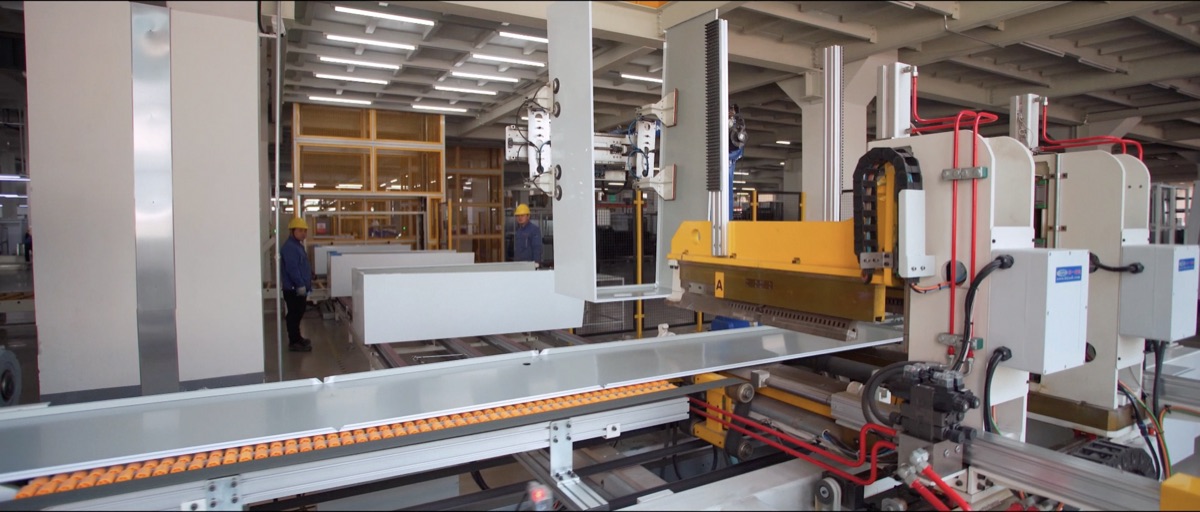
Cabinet panel forming line 03Bending & panel forming
Flat panels are bent and formed into the sections needed for the cabinet shell. Consistent geometry helps the parts fit together during assembly.
Review focusBend geometry and assembly fit
Stage 02
Cabinet & insulation
Prepare the exterior, inner liner and insulated enclosure.
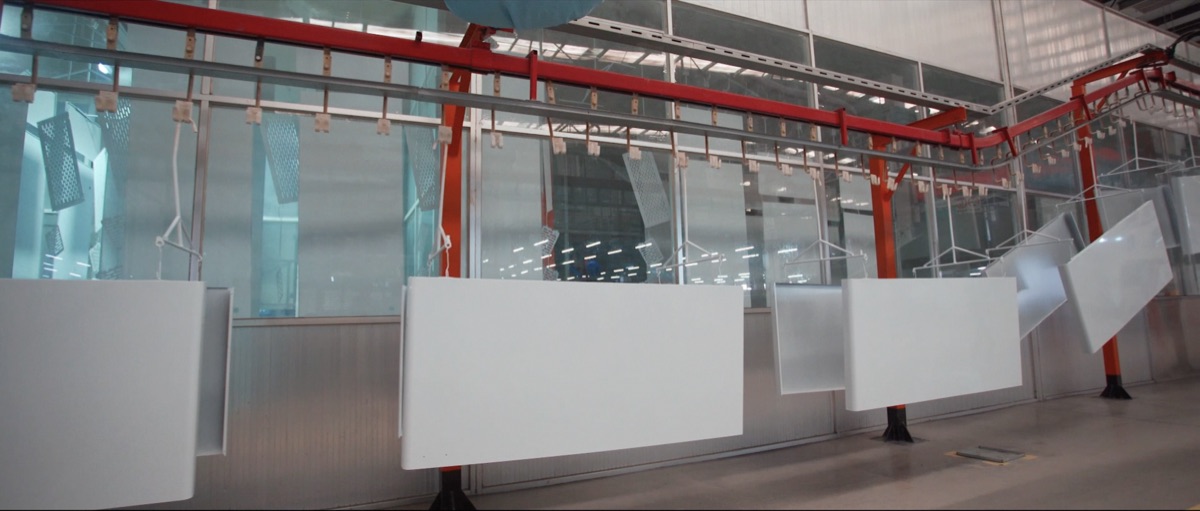
Metal panels on a coating line 04Surface finishing
Applicable metal panels receive the specified surface finish. Colour and finish are selected for the model or OEM brief; stainless and prefinished panels can follow a different route.
Review focusFinish coverage and approved colour
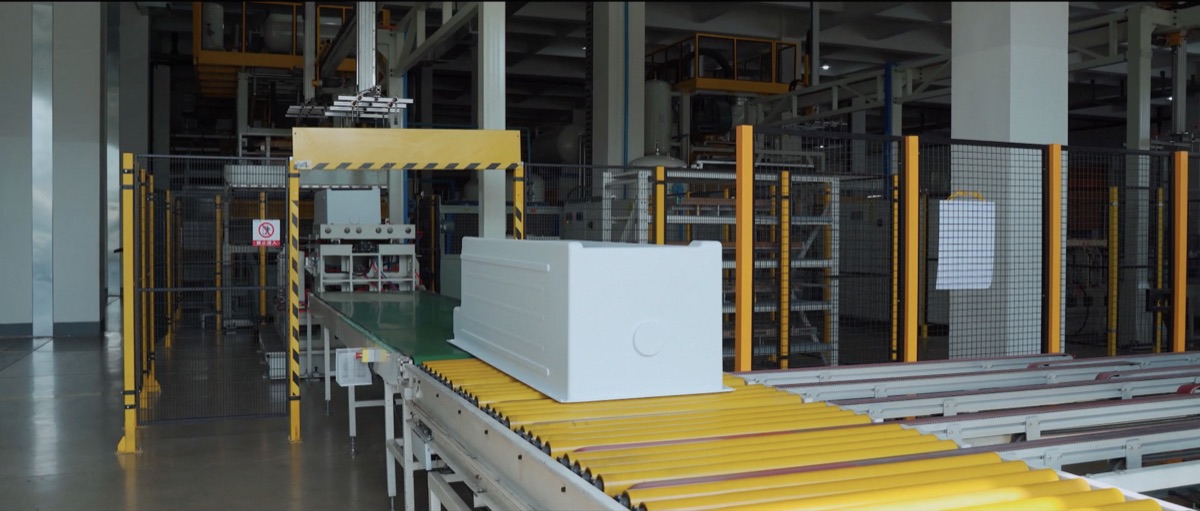
Formed inner liner on the transfer line 05Inner-liner forming
For models with a plastic inner liner, heated sheet is formed over a mould and trimmed. Metal-lined cabinets use a different construction. Liner forming is separate from refrigeration-system evacuation.
Review focusLiner shape, trim and surface integrity
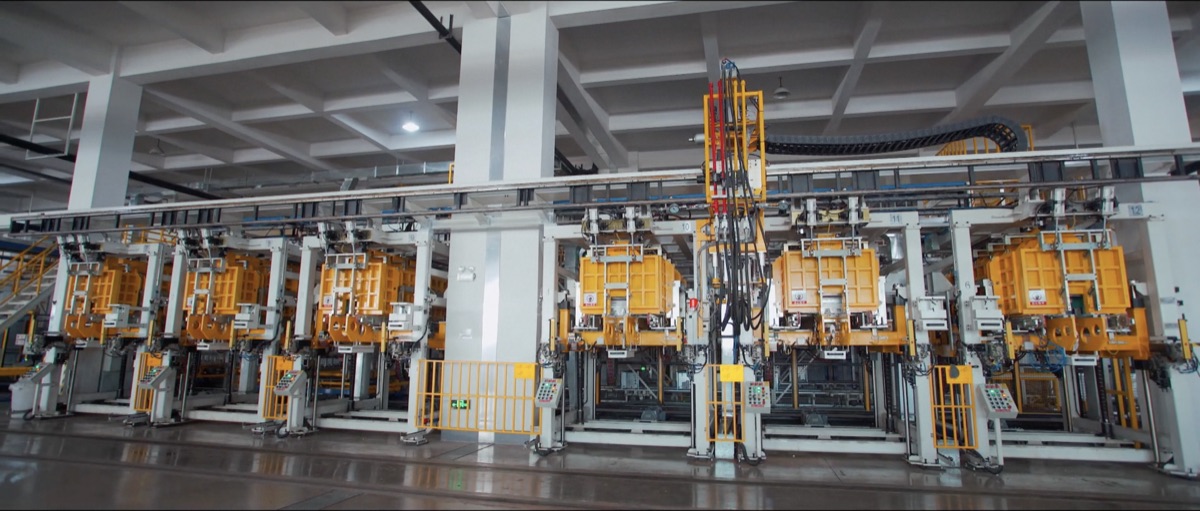
Cabinet fixtures on a production line 06Cabinet assembly & insulation
The shell and liner form the insulated enclosure. In conventional foam-insulated designs, polyurethane fills the cavity and cures in a fixture. Insulation construction depends on the model.
Review focusEnclosure alignment and insulation specification
Stage 03
Assembly & testing
Bring the refrigeration system, electrical parts and cabinet together.
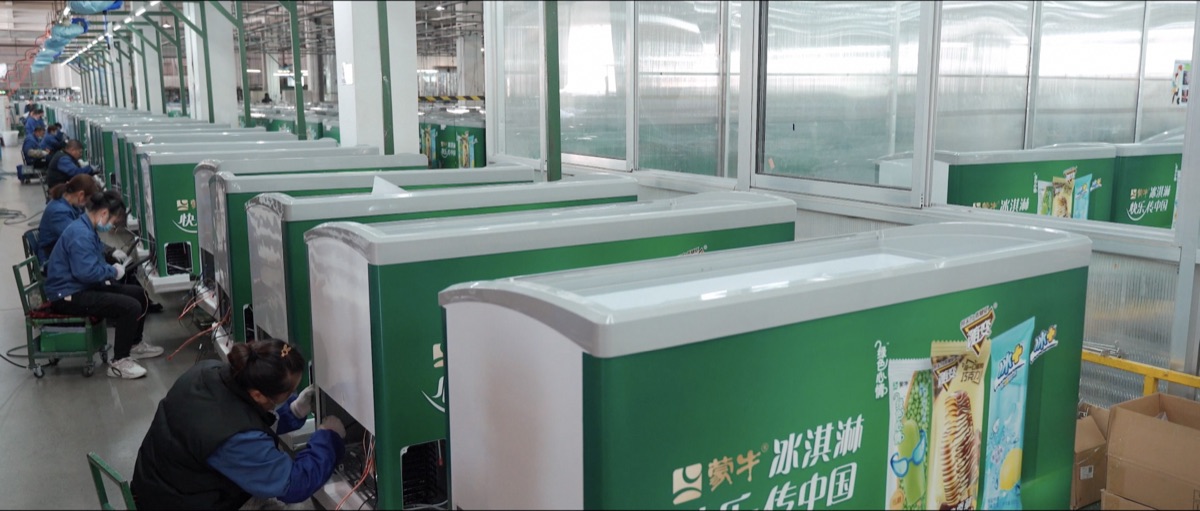
Component installation along the assembly line 07System & electrical assembly
Refrigeration components, wiring and controls are fitted to the selected configuration. Sealed-system work includes joint preparation, leak checks, evacuation and the specified refrigerant charge before powered testing.
Review focusComponent matching, connections and charge specification
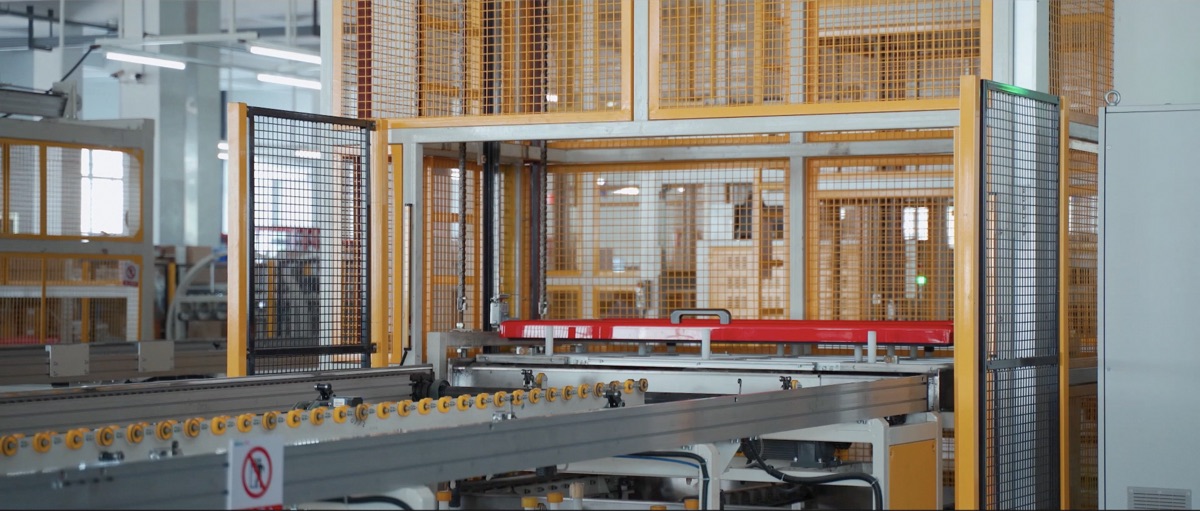
Door component handling equipment 08Door & final fittings
Doors or lids, seals, handles and applicable internal fittings complete the cabinet. Door construction and the point of installation vary between upright coolers and chest freezers.
Review focusDoor alignment, seal contact and smooth operation
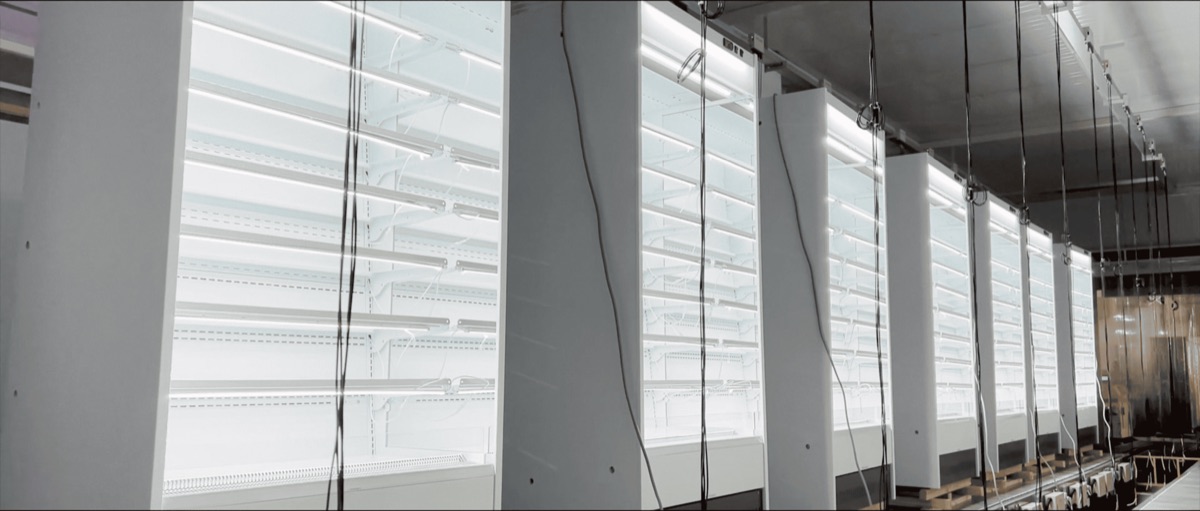
Display cabinets connected for powered inspection 09Powered performance inspection
Powered inspection checks how the completed unit operates. The test plan should identify the temperature conditions, duration, electrical checks and acceptance criteria for the model.
Review focusOperating performance against the agreed test plan
Stage 04
Packing & dispatch
Protect the finished equipment and prepare the shipment.
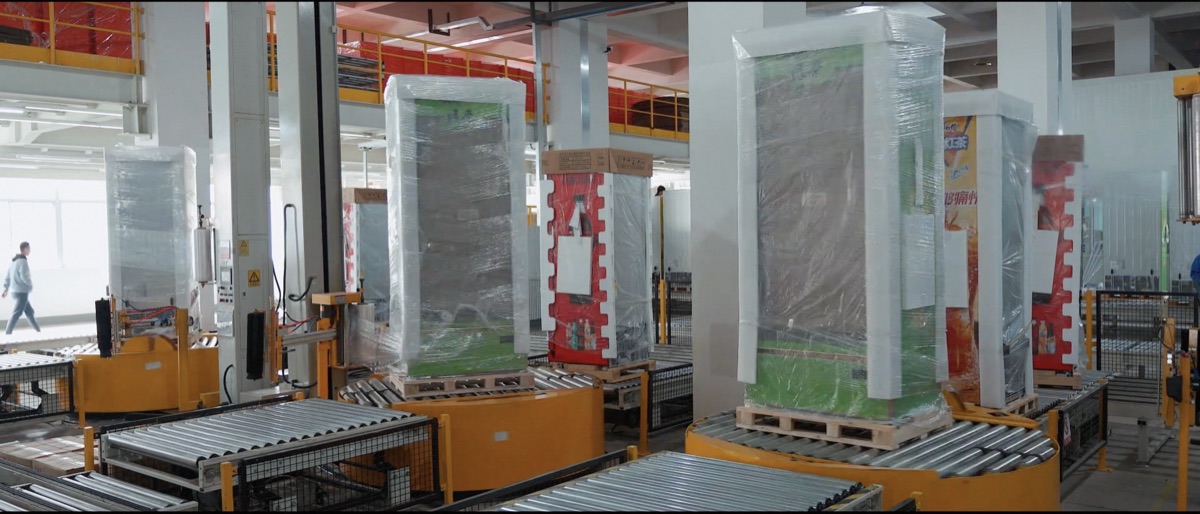
Wrapped cabinets with protective corner pieces 10Protective packing
Protective film, corner protection and a suitable base help protect the cabinet during handling. The packaging combination is selected for the equipment and transport plan.
Review focusProtection of glass, edges and cabinet surfaces
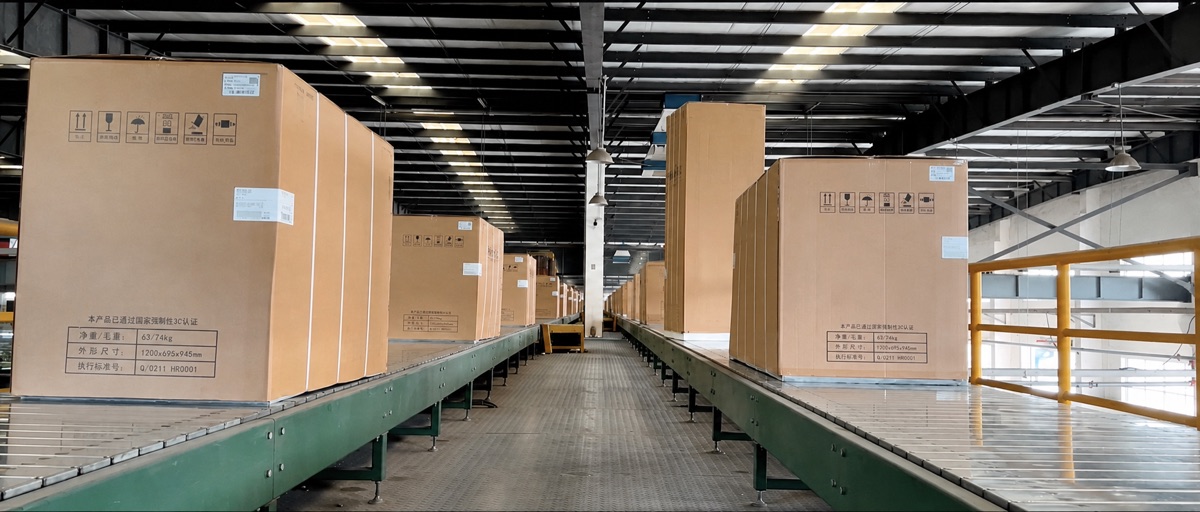
Cartoned equipment on the dispatch line 11Carton identification & staging
Cartons and shipping marks identify the packed equipment. Model details, quantities, accessories and handling instructions should be reconciled with the order before dispatch.
Review focusPack identification and order completeness
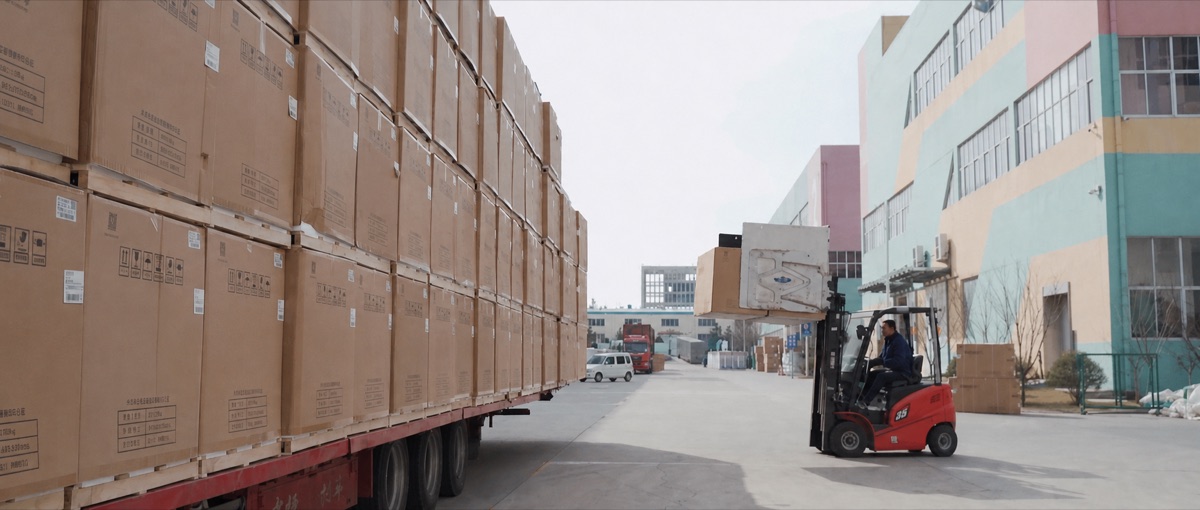
Forklift transfer of cartoned refrigeration equipment 12Loading & dispatch
Packed units are transferred for loading under the shipment plan. Load arrangement, handling and restraint must suit the packaging and the onward transport route.
Review focusLoading condition and shipment coordination
Between assembly and powered testing
The sealed refrigeration circuit.
Joint integrity, cleanliness and the specified refrigerant charge are central to system preparation. Evacuation and charging follow the applicable component instructions and model process; pressures, charge quantities and test limits are not interchangeable between products.
Review WeWell quality checkpoints ↗Buyer questions
What to confirm before production.
Do all commercial coolers and freezers use the same production process?+
No. This is an overview of common stages, not a fixed route for every model. Plastic and metal liners, stainless and coated cabinets, different door designs and different refrigeration systems require different operations. Some components are prepared in parallel before final assembly.
Is vacuum forming the same as evacuating the refrigeration system?+
No. Vacuum forming shapes heated plastic sheet into a liner or other component. System evacuation removes air and moisture from the sealed refrigeration circuit before charging. They serve different purposes at different stages.
Which manufacturing details should a distributor confirm before an order?+
Confirm cabinet material and finish, liner construction, doors and seals, refrigeration and electrical configuration, the model-specific inspection plan, and packaging. For an OEM order, also approve the artwork, rating label and manual together with the technical specification.
Can I review production and inspection before shipment?+
Contact WeWell with the model, order stage and review requirements. The team can discuss a factory visit, third-party inspection or remote walkthrough and confirm which facility, records and checkpoints are available for that project.
Technical background
General insulation and sealed-system explanations draw on Cannon’s refrigerator-line overview and Danfoss compressor mounting guidance. These references describe industry practice, not WeWell equipment brands or model certifications.
Plan your order
Confirm the process for your model.
Share the product, destination market and inspection requirements so the production and review scope can be discussed together.
Discuss production requirements ↗From production review to an export order
Compare beverage display cooler models and commercial chest freezers, then prepare the model, inspection and delivery scope with the export quotation checklist.